How AI Search Changes the Way People Discover Products
Why this matters
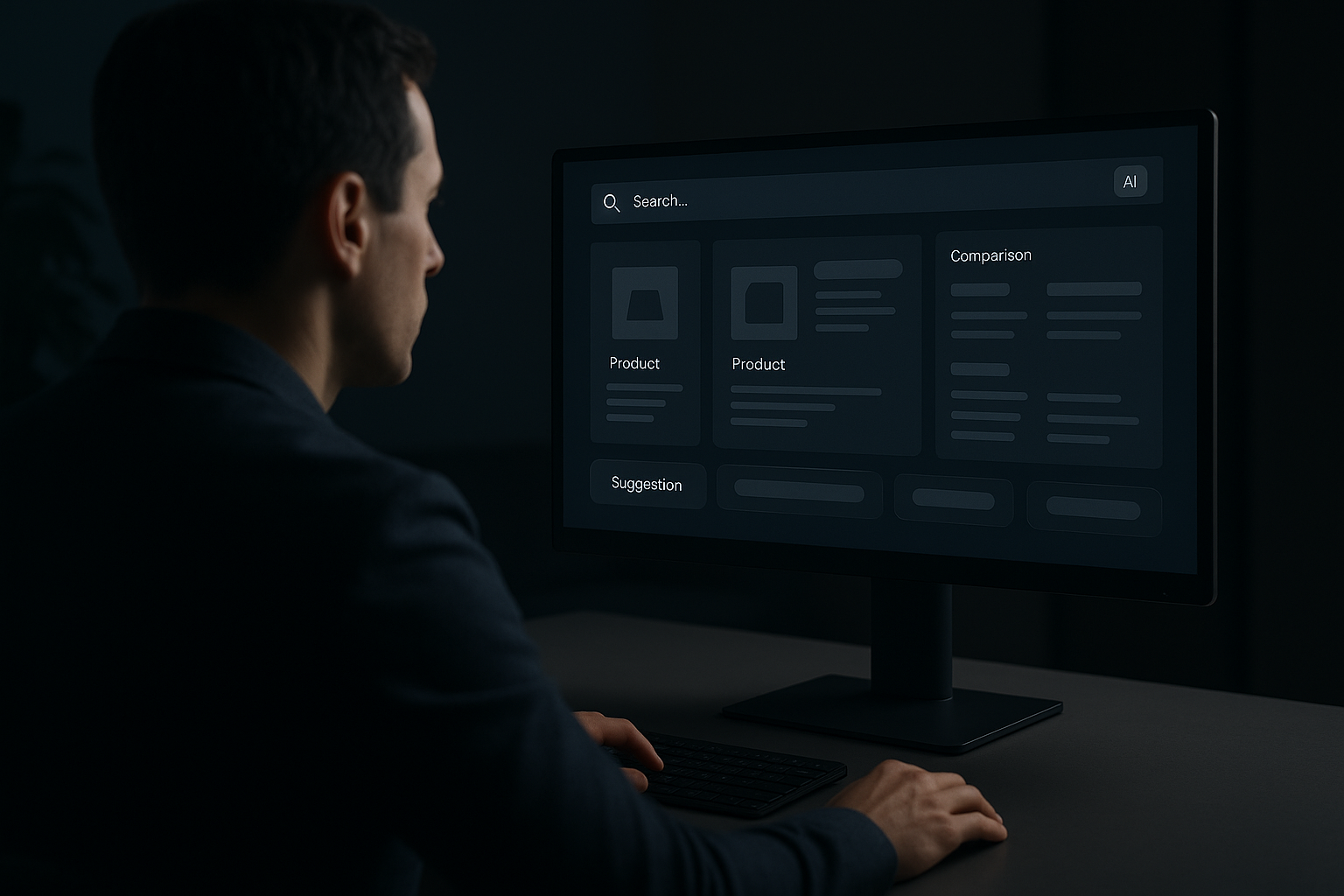
Search used to return lists of links. People scanned titles and pages until they found something that looked right. AI search shifts the interface and intent: instead of surfacing links, it synthesizes options, compares them, and guides selection. For product teams, this changes what to build, what data to prioritize, and how to measure success.
This post explains the shift in practical terms and gives concrete design and implementation guidance you can apply without overengineering.
Old-school model: links, lists, and manual comparison
Typical characteristics:
- Query → ranked list of links.
- Users click into product pages, read specs, and manually compare.
- Discovery relies on page titles, SEO, and filters (facets).
- Good for exploration when the user wants to browse and inspect individual pages.
Limitations:
- High cognitive load for side-by-side comparison.
- Hidden tradeoffs (features buried in descriptions).
- Slow for users who want a recommendation tailored to constraints (budget, size, use-case).
New-school model: guided selection and synthesis
AI search adds layers on top of ranking:
- Synthesis: condense multiple product pages into a short, explicit comparison.
- Guided questions: clarify intent before presenting options (conversational or form-style).
- Tradeoff-aware ranking: surface choices that match constraints and explain why.
- Actionable outputs: comparison tables, recommended picks, or next steps (try, demo, buy).
Because the interface is producing conclusions, the product discovery flow becomes more decision-oriented and less click-oriented.
Design patterns for guided discovery
These are practical, low-friction patterns you can prototype quickly.
- Intent-first prompts
- Ask one or two clarifying questions up front (e.g., "Prioritize price, reliability, or portability?").
- Use those answers to filter and weight options rather than relying only on keyword matching.
- Synthesis cards
- Present a short summary of 3–5 best-fit products with one-line reasons (e.g., "Best for battery life").
- Include the most relevant specs and a confidence note (where data is incomplete).
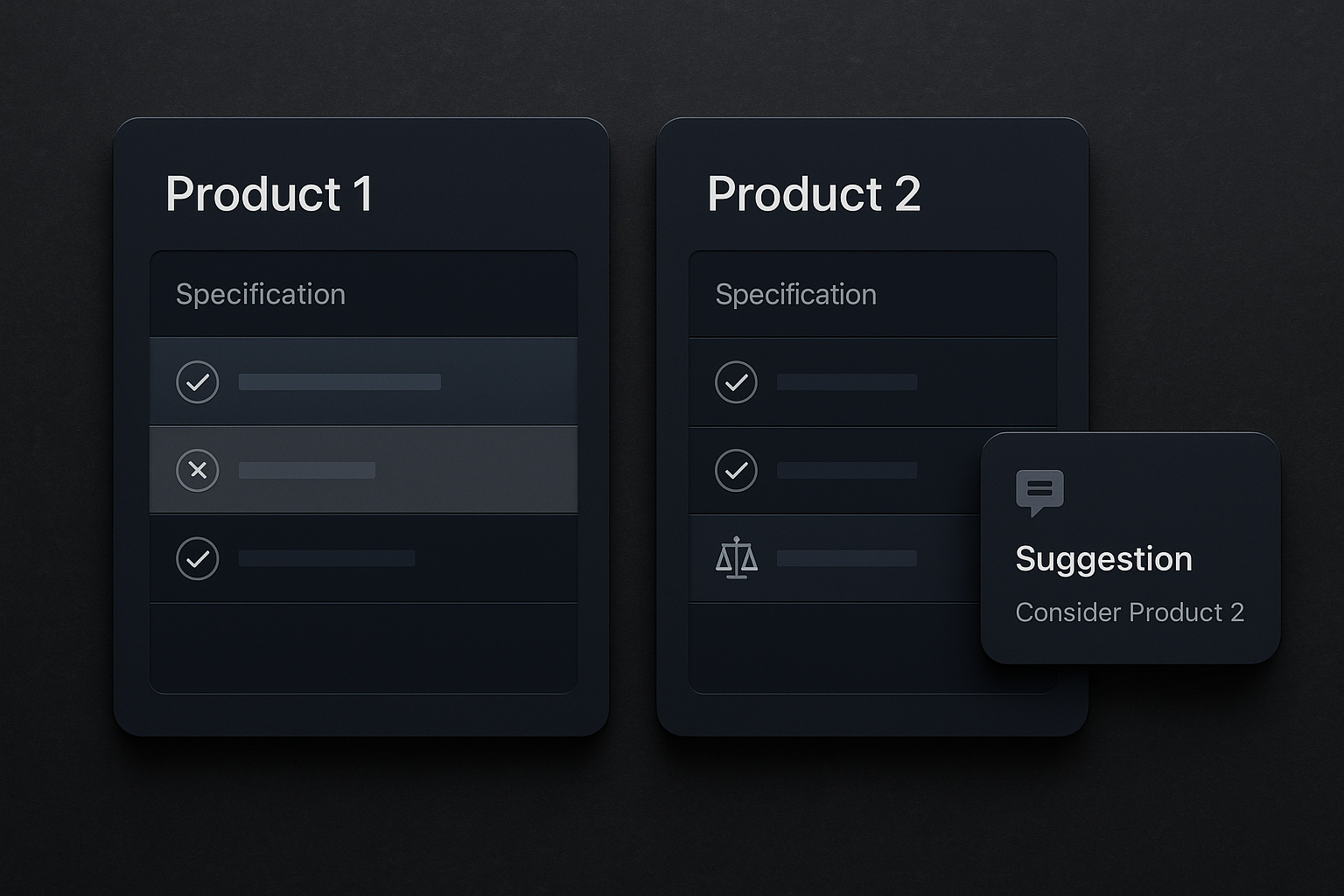
- Side-by-side comparison view
- Show comparable attributes in aligned rows so tradeoffs are visible at a glance.
- Allow toggling which attributes matter (performance, durability, integrations).
- Progressive disclosure
- Start simple. Let users ask for more detail if they want it (deeper specs, raw reviews, pricing history).
- Explanation snippets
- For each recommendation, include the signal that drove it (e.g., "high reviewer reliability" or "matches your size constraint").
These patterns reduce friction for users who want a decision, while still allowing deeper exploration for browsers.
Data and signals you need
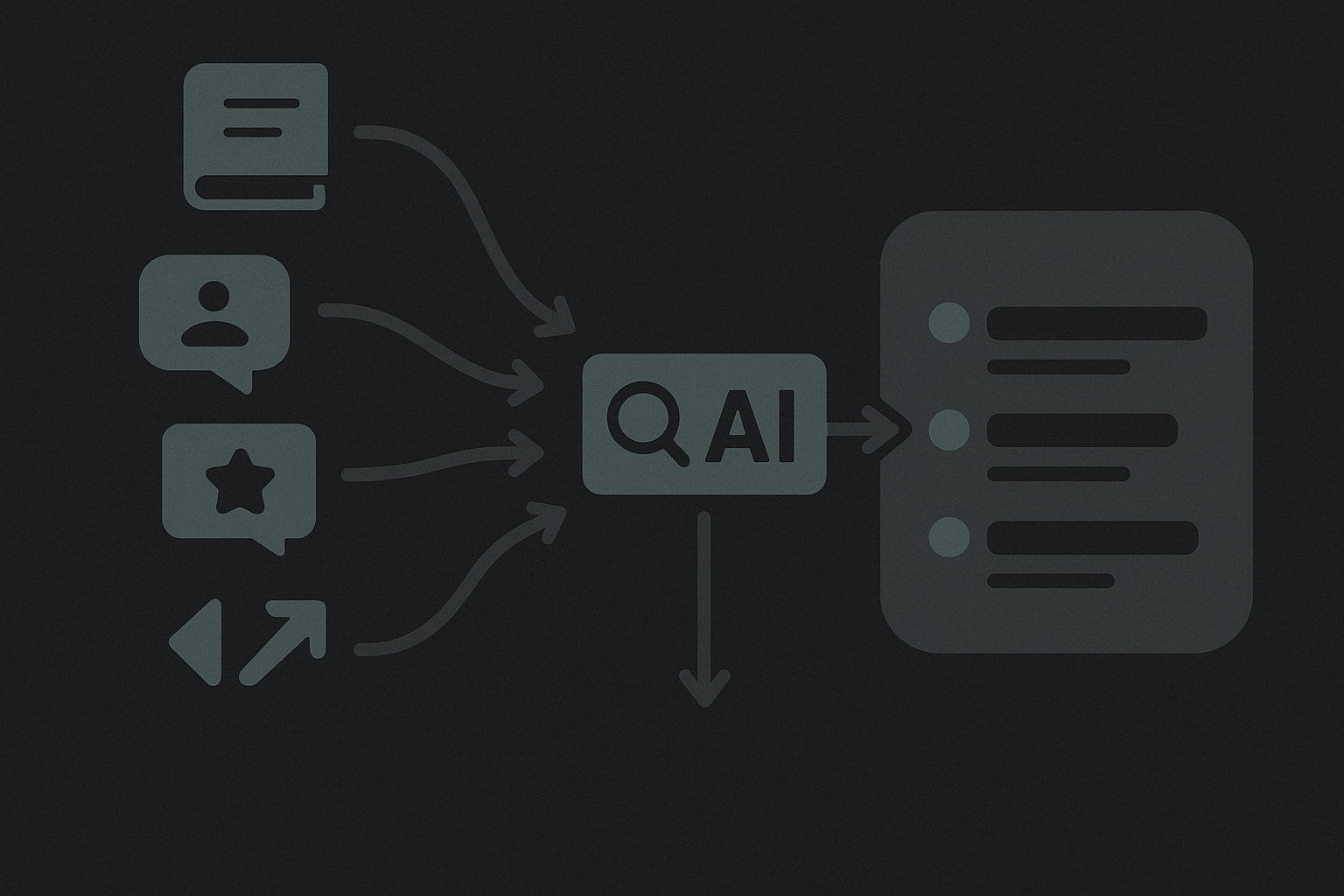
AI synthesis is only as useful as the inputs. Prioritize these sources:
- Canonical product catalog data: specs, SKUs, variants.
- Structured pricing and availability feeds.
- Reviews and returns data (to surface common failure modes).
- Usage/context signals: device, geolocation, previous purchases, stated intent.
- Business rules: margins, inventory limits, promotional constraints.
Map these to two practical steps:
- Create a clean canonical layer: a single API or dataset that unifies product fields and normalizes units (e.g., inches, watts).
- Tag uncertainty: flag fields that are estimated or missing so the UI can show confidence and fallback behavior.
Measuring success
Move beyond raw click-through. Useful metrics for AI-driven discovery:
- Time-to-decision: how long from query to a purchase or saved shortlist.
- Decision confidence: explicit feedback or implicit signals (do users accept the suggested product or immediately rephrase?).
- Conversion by intent: how recommendations perform for users who want "best value" vs "best performance."
- Downstream outcomes: returns, support tickets, and churn—these tell you if the guided choice matched real-world needs.
Track both short-term engagement and longer-term product fit.
Implementation tips (start small)
- Prototype a two-question intent funnel + 3-item synthesis. Test whether users prefer recommendations vs lists for your category.
- Use deterministic rules for high-risk decisions (warranty, compliance) and reserve synthesis for preference-based choices.
- Keep a human handoff: if confidence is low or the cost of a wrong choice is high, escalate to a specialist or add a "chat with an expert" option.
- Log signals and user corrections. They form the most actionable data for iterative improvement.
Pitfalls and trade-offs
- Overconfidence: synthesized answers can sound authoritative even when data is incomplete. Always surface confidence and sources.
- Narrowing discovery too early: aggressive filtering can hide novel options. Offer a "show broader options" toggle.
- Privacy and personalization balance: use contextual signals carefully and explain how they improve recommendations.
- Operational constraints: real-time availability, pricing accuracy, and fulfillment rules must be integrated; otherwise recommendations lead to broken flows.
Quick checklist before launching
- Canonical product dataset in place and normalized
- Clear intent-capture (1–3 questions) on the search path
- 3–5 synthesis templates for common intents
- Confidence indicators and source attribution in the UI
- Monitoring for time-to-decision, conversion, and returns
Practical example (short)
Imagine a user needs a portable monitor for travel. Traditional search returns many product pages. With AI search you:
- Ask: "Is portability or screen size more important?"
- Weight results: prioritize weight/battery specs.
- Return: three recommended monitors with one-line reasons, side-by-side weight/size/resolution, and a "why this" note pulling from specs and recent reviews.
If a user wants a cheaper alternative, they can toggle price and instantly get a new synthesis.
Closing: the design shift
AI search moves product discovery from pointing users to information toward helping them decide. That changes priorities for product teams: better structured data, clear signals of confidence, and UI patterns that show tradeoffs. Start with small, measurable experiments and keep the human fallback for high-risk cases.
Practical takeaway: build a minimal intent capture + 3-item synthesis, surface confidence and sources, and measure time-to-decision as your primary KPI.
