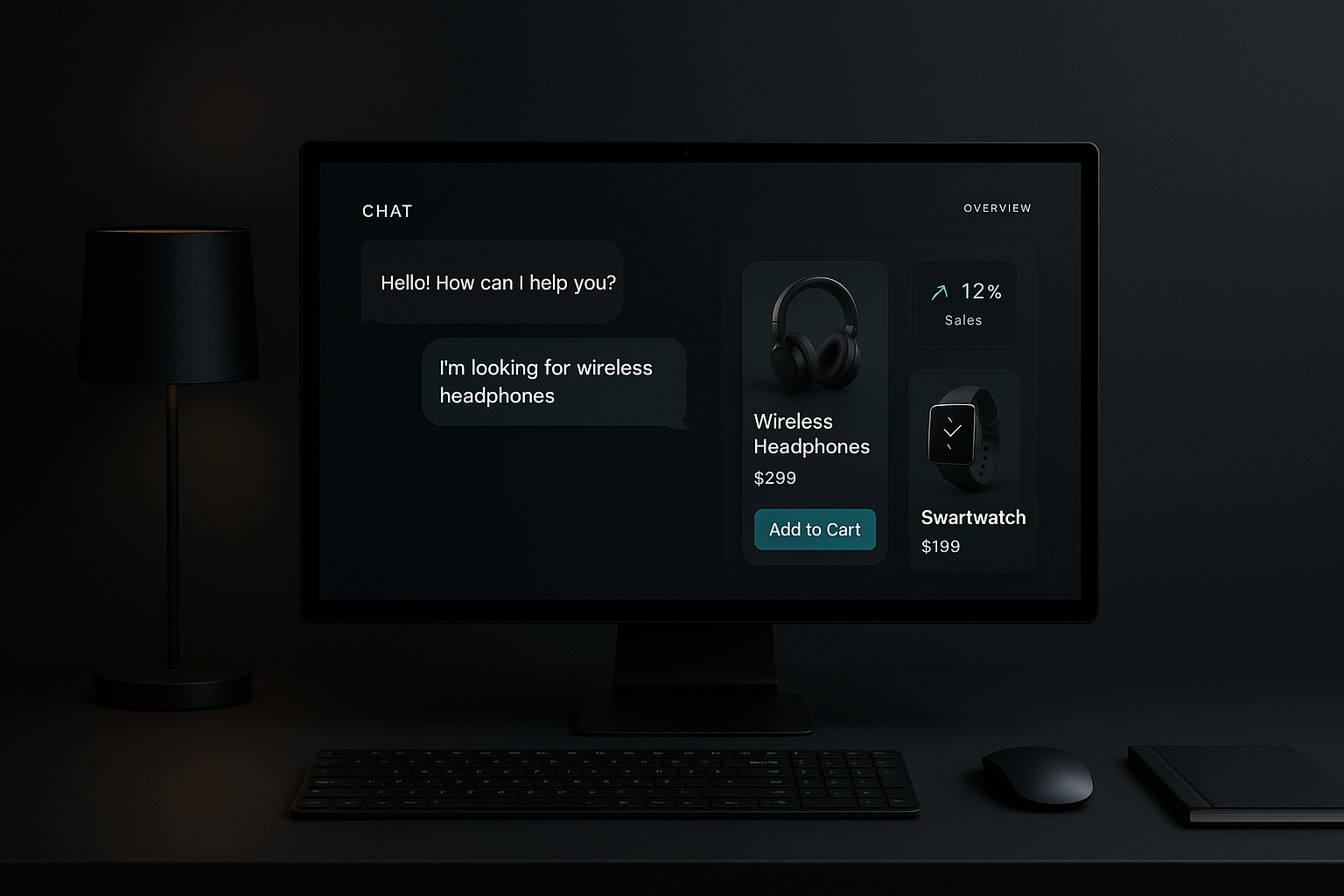
The Rise of AI Shopping and What It Means for Brands
Conversational product discovery — chat- or voice-driven flows that help shoppers describe what they want and get product suggestions — is moving from novelty to mainstream. For brands this changes three practical areas: SEO, merchandising (the catalog and experience), and trust signals (what convinces someone to buy).
This post is a pragmatic guide: what shifts to expect, what to check in your stack, and a short checklist you can use right away.
Why conversational discovery is different
Traditional search and browsing rely on keywords, category hierarchies, and product detail pages. Conversational discovery emphasizes intent, context, and multi-turn clarification. Instead of typing a few words into a search box and scanning results, a shopper can describe needs in natural language, get follow-ups from the system, and receive a ranked set of recommendations with explanations.
Key differences to keep in mind:
- Queries are longer and more specific (multi-attribute requests).
- Systems surface concise answers and ranked choices, not just lists of links.
- Conversation history matters — follow-up questions refine results.
- The shopping experience is often mediated by an agent or assistant rather than a page-by-page journey.
What this does to SEO
Conversational discovery reduces the importance of single keyword matches and raises the importance of entity-level relevance and answer-quality.
Practical implications:
- Optimize for intent and entities, not only keywords. Structure content around use cases, product attributes, and buyer goals (e.g., “backpack for 15-inch laptop, water-resistant, carry-on friendly”).
- Surface short, accurate answers in addition to long-form pages. Agents pick concise snippets: ensure your product pages have scannable facts and clear product summaries near the top.
- Use structured data (Product schema, FAQ schema, reviews schema). These help agents identify canonical facts like price, availability, dimensions, and shipping options.
- Treat conversational logs as a new SEO source. Capture the phrases people use in assistant sessions and map them back to product taxonomy and content gaps.
- Watch for answer attribution and canonicalization. Agents prefer authoritative sources; ensure your product pages are the clearest, most complete source for the product’s facts.
Technical checks:
- Add or audit Product schema and FAQ schema on product and category pages.
- Produce short summary paragraphs (1–2 sentences) that answer common product questions and place them near the top of pages.
- Export conversational query logs and add them to keyword research and content planning.
Merchandising and the storefront
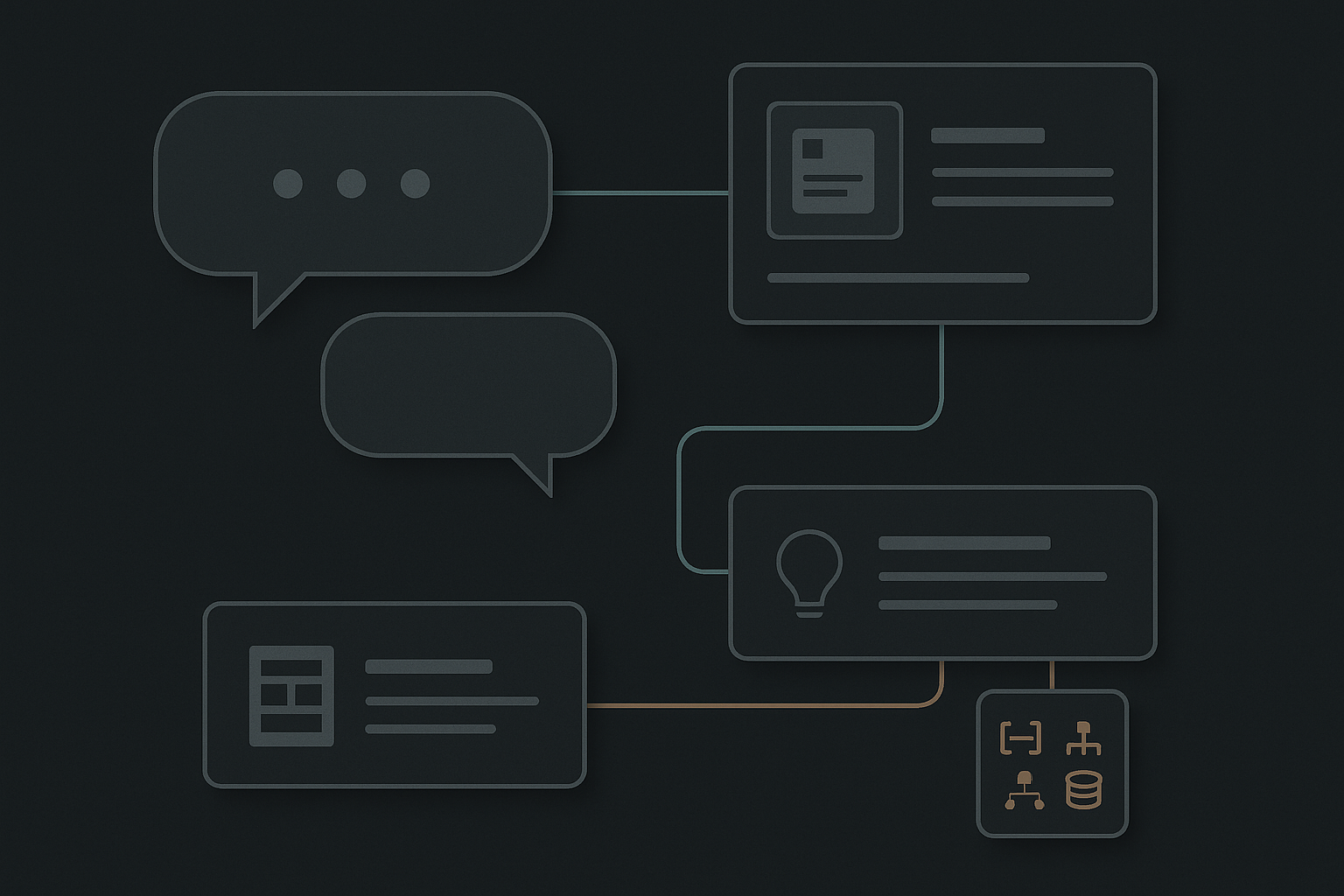
Conversational discovery changes how customers are routed through your catalog. Instead of landing on a category page, they might get a ranked bundle or a single curated product. That means merchandising needs to be signal-ready and dynamic.
What merchandisers should do differently:
- Make products composable. Tag products with attributes that map directly to conversational filters (fit, material, use case, compatibility, etc.).
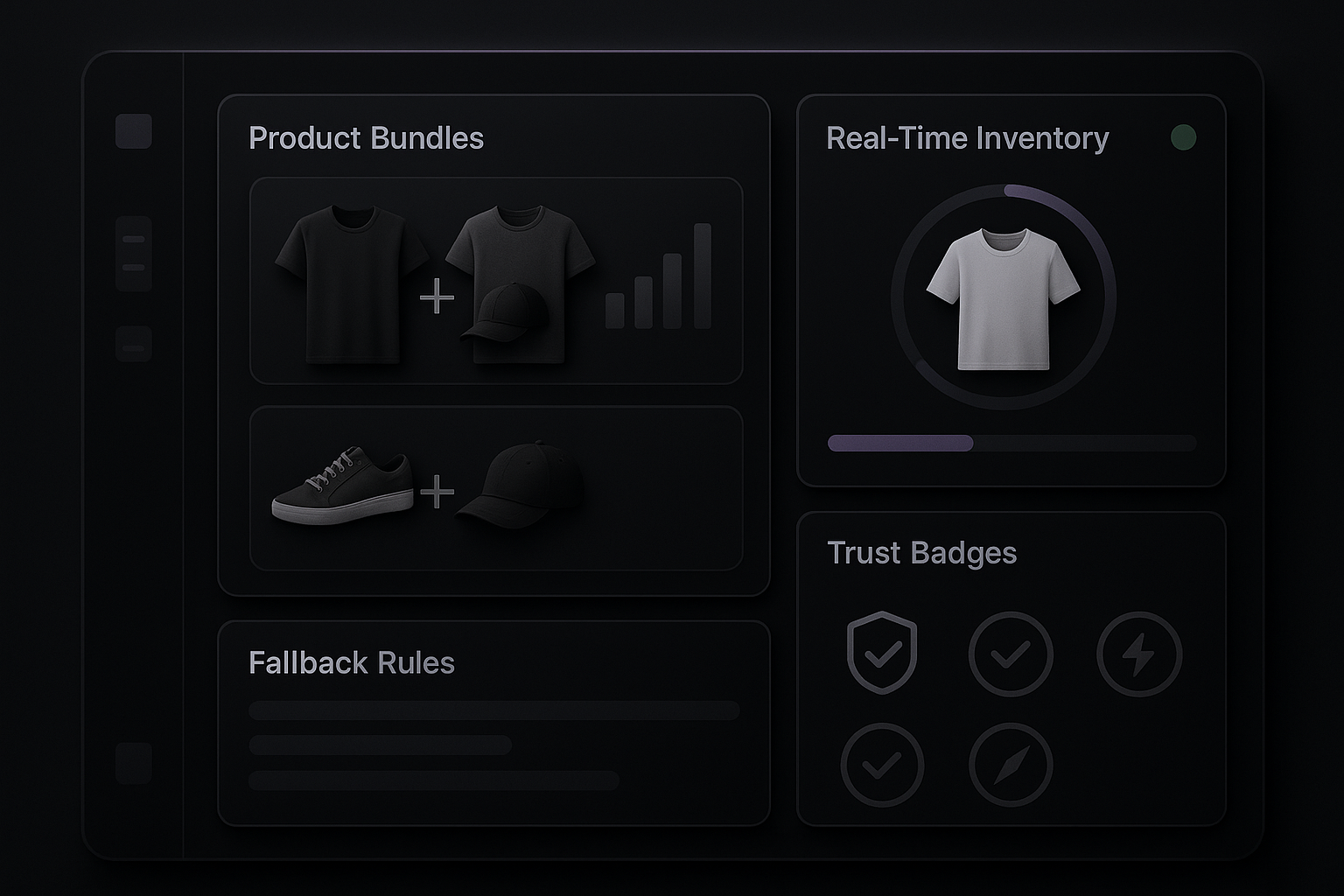
- Support dynamic bundles and fallbacks. Conversations often call for alternatives (out-of-stock substitution) or bundles (accessories). Build rules and quick templates for these.
- Keep inventory and price signals real-time. Agents will surface items based on availability. Stale inventory causes broken recommendations and erodes trust.
- Maintain editorial control where it matters. Allow merch teams to pin or boost products for certain intents or audiences.
- Design a “first answer” experience. Think about what the assistant should show first: one product, three alternatives, or a short comparison.
Operational changes:
- Expose your product attributes via an API or product feed optimized for conversational filters.
- Add metadata for substitution and compatibility (e.g., what to recommend if an item is out of stock).
- Create a lightweight rules engine for merchandising decisions used by the assistant.
Trust signals in a conversational world
When a conversation recommends a product, customers rely on a few quick cues to decide: is this right for me, is it reliable, and can I return it if not? Those signals must be fast and visible to the assistant.
Key trust-building elements:
- Verified reviews and ratings surfaced as concise summaries (not full review pages). Agents will use these snippets; make sure they’re accurate and representative.
- Clear return, warranty, and shipping info in structured form. An assistant should be able to say “30-day returns” or “2-year warranty” confidently.
- Product provenance and materials. For categories where this matters (furniture, apparel), surface key materials and certifications.
- High-quality images and, where possible, short demo videos. Assistants often show thumbnails; ensure the first images communicate fit and scale.
- Real-time stock and lead times. If an item is pre-order or backordered, that should be a top-level fact the assistant can state.
Practical steps:
- Make your review summaries easy to parse (average rating, top pros/cons).
- Add structured fields for return policy, warranty length, and lead time.
- Ensure primary images show scale and context (lifestyle shots plus product-only shots).
Measurement and iteration
Conversational shopping needs different KPIs and experiments.
What to measure:
- Assist-to-conversion rate: percentage of assistant sessions that lead to checkout or add-to-cart.
- Query completion rate: how often the assistant resolves intent without handing off to a human or search results page.
- Fallback reasons: why an assistant couldn’t answer (missing data, out-of-stock, ambiguous query).
- Post-conversation satisfaction (quick feedback prompts) and returns rate for assistant-originated orders.
Experiment ideas:
- A/B test different first-answer formats (single product vs. top-3 vs. short comparison).
- Test boosting policies (e.g., brand boost for certain intents) and measure conversion and satisfaction.
- Run a pilot that channels only a portion of traffic to the assistant and compare long-term LTV and returns.
Implementation checklist (30–90 day plan)
Quick items (30 days):
- Audit Product schema and implement missing fields (price, availability, SKU, returns).
- Export conversational logs or search queries and map to content gaps.
- Add short product summaries and clear top-of-page facts.
Mid-term (60 days):
- Build a product-attribute feed optimized for conversational filters and your assistant API.
- Implement review summary fields and structured return/warranty metadata.
- Put basic fallback rules in place for substitutions and out-of-stock handling.
Longer (90 days):
- Create a merchandising control panel for pinned/boosted items and dynamic bundles.
- Instrument assistant sessions with event-level analytics and feedback prompts.
- Run systematic A/B tests on answer format and merchandising rules.
Common pitfalls to avoid
- Treating conversational queries like regular search logs — they’re different in length and intent.
- Relying on static snapshots of inventory or price — agents need real-time feeds.
- Dumping the whole review corpus into the assistant without summarizing — users want quick, representative signals.
Final notes
Conversational shopping isn’t magic; it’s a different distribution channel with its own expectations. Brands that prepare product data, merchandising rules, and trust signals for short, intent-rich exchanges will convert more reliably and reduce friction.
Practical takeaway: start by making the facts about your products easy for an assistant to read. Add structured metadata for price, availability, returns, and short summaries — then use conversational logs to prioritize merchandising fixes and content gaps.
