From On Prem to Cloud to AI — Three Eras of Software Change
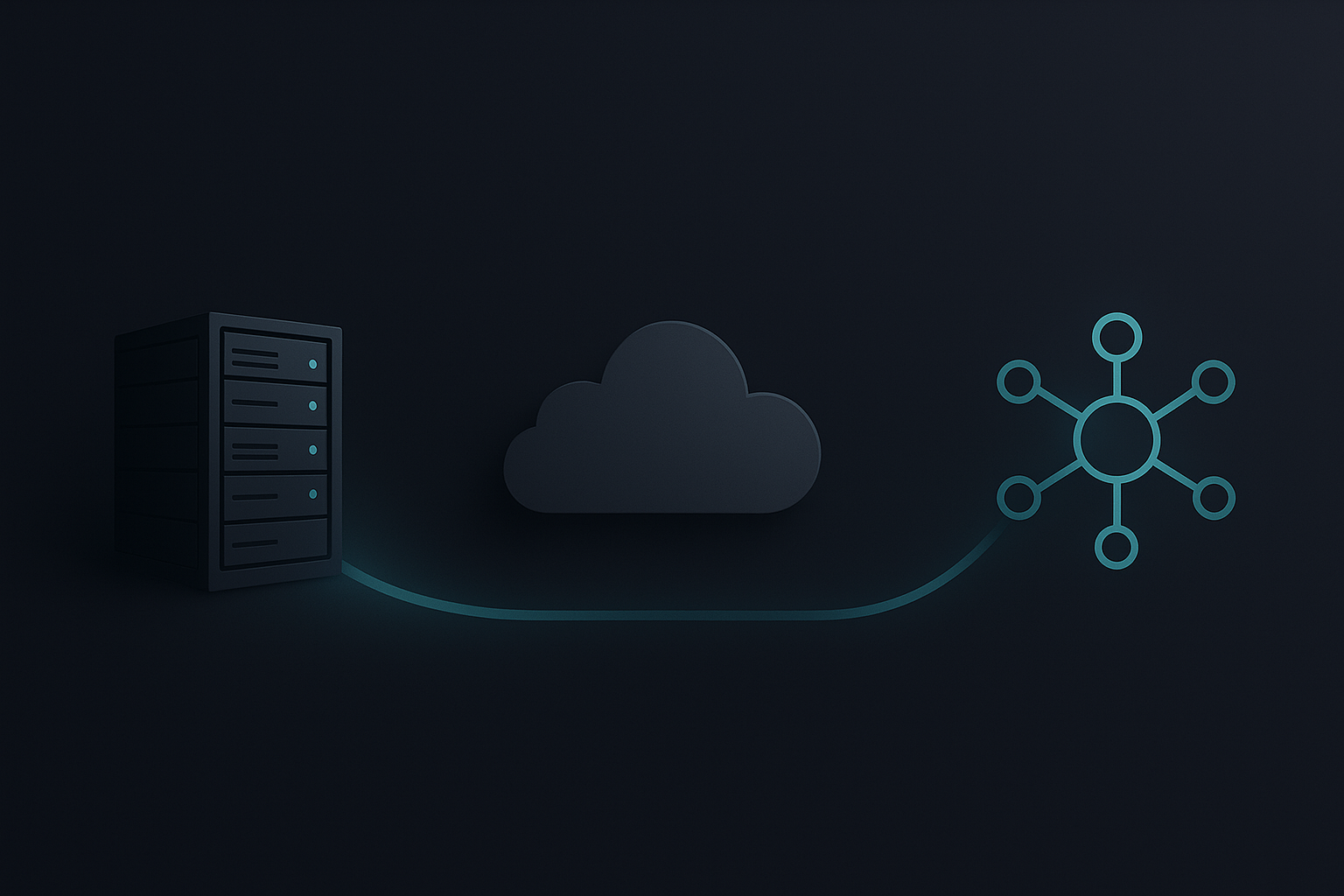
Software platforms didn’t evolve overnight. They moved through three practical eras: on‑premise, cloud, and now AI. Each era changed what teams had to do, what they needed to measure, and how they organized work.
This post gives a simple timeline, the concrete demands of each era, and a short checklist to help teams plan the next transition.
Quick timeline (one line)
- On‑Premise (pre‑2010s): You own the servers. You run everything.
- Cloud (2010s–present): You outsource infrastructure and use managed services.
- AI (2020s–present): You build systems that combine models, agents, and human oversight.
Era 1 — On‑Premise: Ownership and control
What it looked like
- Servers, racks, and on‑site datacenters.
- Manual deployments, physical networking, and capacity planning.
- Applications tightly coupled to hardware and OS versions.
What teams needed to do
- Hardware procurement and maintenance.
- Capacity forecasting and on‑site troubleshooting.
- Long release cycles with heavy change control.
Skills and roles that mattered
- Systems administrators and network engineers.
- Strong operational discipline (maintenance windows, runbooks).
- On‑call rotations focused on hardware and OS issues.
Common constraints and risks
- Slow time to market because provisioning was manual.
- Capital expense and sunk costs in hardware.
- Fragile upgrades: major changes required big projects.
When to keep parts of it
- Regulatory or data residency needs that require physical control.
- Ultra‑low latency or very specialized hardware requirements.
Era 2 — Cloud: Platform and elasticity
What it looked like
- Virtualized infrastructure, IaaS and PaaS, serverless functions.
- Managed databases, object storage, and on‑demand scaling.
- Infrastructure as Code (IaC) and CI/CD pipelines.
What teams needed to do
- Learn API‑driven platforms and cost management.
- Shift from hardware ops to platform/configuration ops.
- Automate testing and deployments for faster releases.
Skills and roles that mattered
- DevOps and SRE-style roles focused on automation.
- Cloud architects who map services to business needs.
- Engineers comfortable with IaC, monitoring, and observability.
Common constraints and risks
- Sprawl and unexpected cloud costs without guardrails.
- Overreliance on a single provider can create lock-in.
- Need for new security models (identity, permissions, shared responsibility).
When cloud shines
- Rapid scaling, frequent releases, and product iteration.
- When teams prefer operational speed over hardware control.
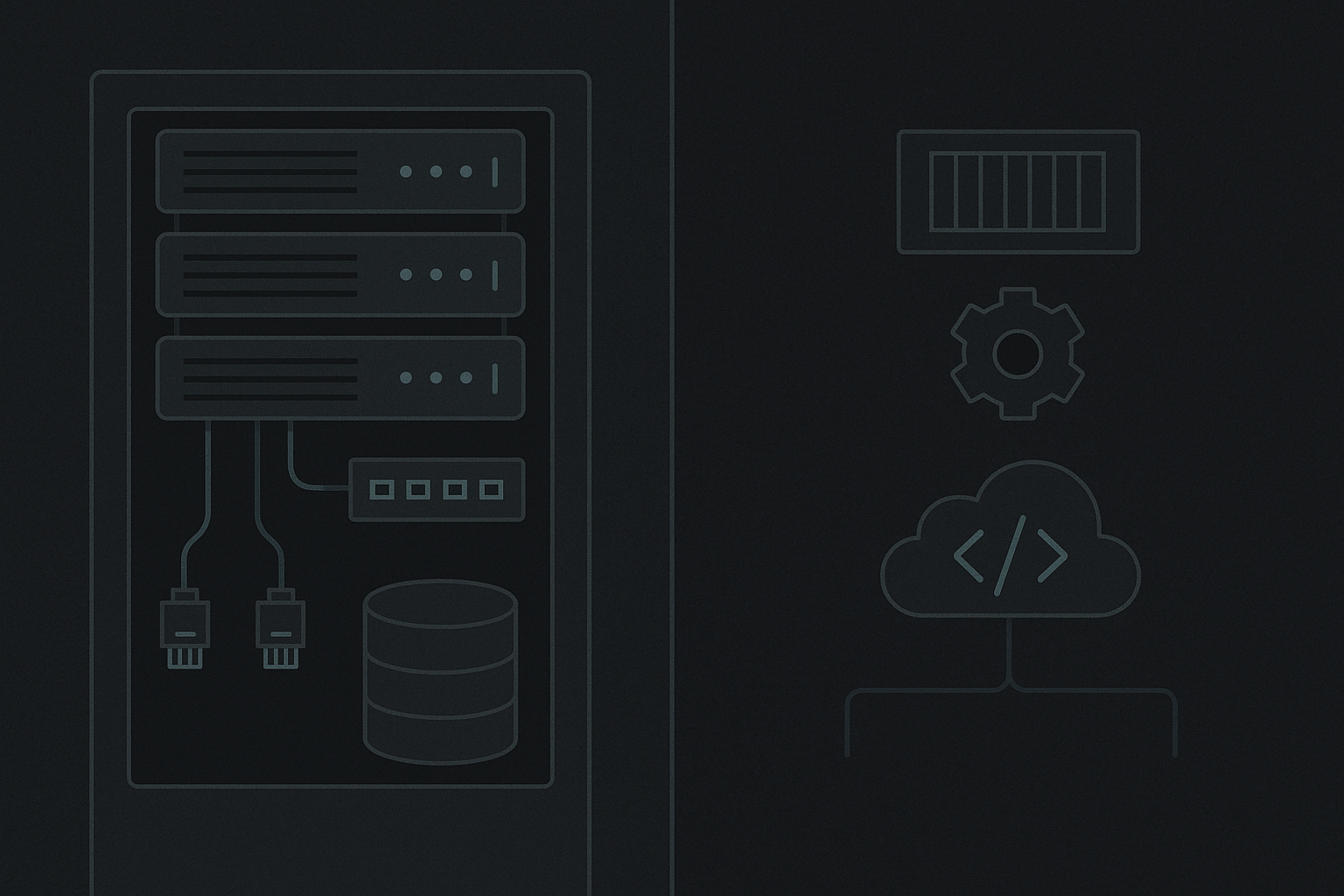
Practical checklist for teams moving from on‑prem to cloud
- Inventory what you actually use and why — don’t lift and shift without cleanup.
- Start with nondisruptive services (backup, dev/test) to learn cost behavior.
- Establish tagging and cost‑allocation early.
- Invest in CI/CD and IaC before migrating core services.
Era 3 — AI: Models, agents, and human–machine workflows
What it looks like
- Hosted models (API inference), custom models, and agent patterns.
- Systems that route tasks between humans, apps, and autonomous agents.
- New observability: model behavior, prompt versions, data lineage.
What teams need to do differently
- Design for probabilistic outputs rather than deterministic ones.
- Build guardrails: validation, feedback loops, and escalation paths.
- Monitor model performance, drift, and data quality.
Skills and roles that matter now
- ML Engineers and Prompt Engineers (or equivalent roles focused on model behavior).
- Product managers who can define acceptable failure modes and human handoffs.
- Compliance and trust roles who manage disclosures and provenance.
Common constraints and risks
- Models make plausible but incorrect outputs — human oversight is essential.
- Hidden costs: inference, data labeling, and retraining add ongoing expense.
- Data leakage and privacy issues when connecting sensitive systems.
When AI makes sense
- When you have repetitive tasks that benefit from language or pattern recognition.
- When augmenting human work (assistants, summarization, decision support).

Practical checklist for adding AI to your stack
- Start with well‑scoped use cases that have clear success metrics (reduce time, increase accuracy).
- Keep humans in the loop for verification and edge cases.
- Log inputs and outputs for auditability and retraining.
- Budget for continuous monitoring and model updates.
How the demands changed across eras (one glance)
- Ownership: From physical ownership → platform reliance → orchestration of models and services.
- Pace: From slow, big releases → fast, iterative releases → continuous model and policy updates.
- Certainty: Deterministic ops → API surface area and cost variability → probabilistic model outputs.
- Organization: Ops teams focused on hardware → DevOps/SRE plus cloud finance → new ML/product/compliance collaboration.
Practical roadmap for teams (three steps)
Audit current state
- Map software, data flows, and where decision‑making happens.
- Note constraints (compliance, latency, skill gaps).
Prioritize based on friction
- Move low‑risk workloads first: backups, logging, dev environments.
- For AI, pilot well‑defined tasks with measurable outcomes.
Build repeatable practices
- IaC, CI/CD, cost governance, and observability for cloud readiness.
- For AI: versioned prompts/models, failover humàn paths, and monitoring.
Final notes on tradeoffs
- There’s no one right era to live in — hybrid is normal. Many organizations run on‑prem for sensitive systems, use cloud for scale, and layer AI where it adds clear value.
- The real work is operational: policies, monitoring, and human workflows evolve more slowly than technology. Plan for that gap.
Practical takeaway
Pick one small, measurable migration or AI pilot, define the human handoff, and instrument it for monitoring before you expand. That single loop — build, measure, adjust — is the constant across all three eras.
