
The Hidden Cost of Manual Handoffs in Modern Teams
Manual handoffs — copying a ticket, tagging a person, or sending a checklist by email — are everywhere. Each one looks cheap and fast in isolation. Together they create measurable drag: delays, repeated work, confusion, errors, and lower throughput.
This post explains where that drag appears, why it matters, and what practical steps teams can take to cut it without a rip-and-replace of existing systems.
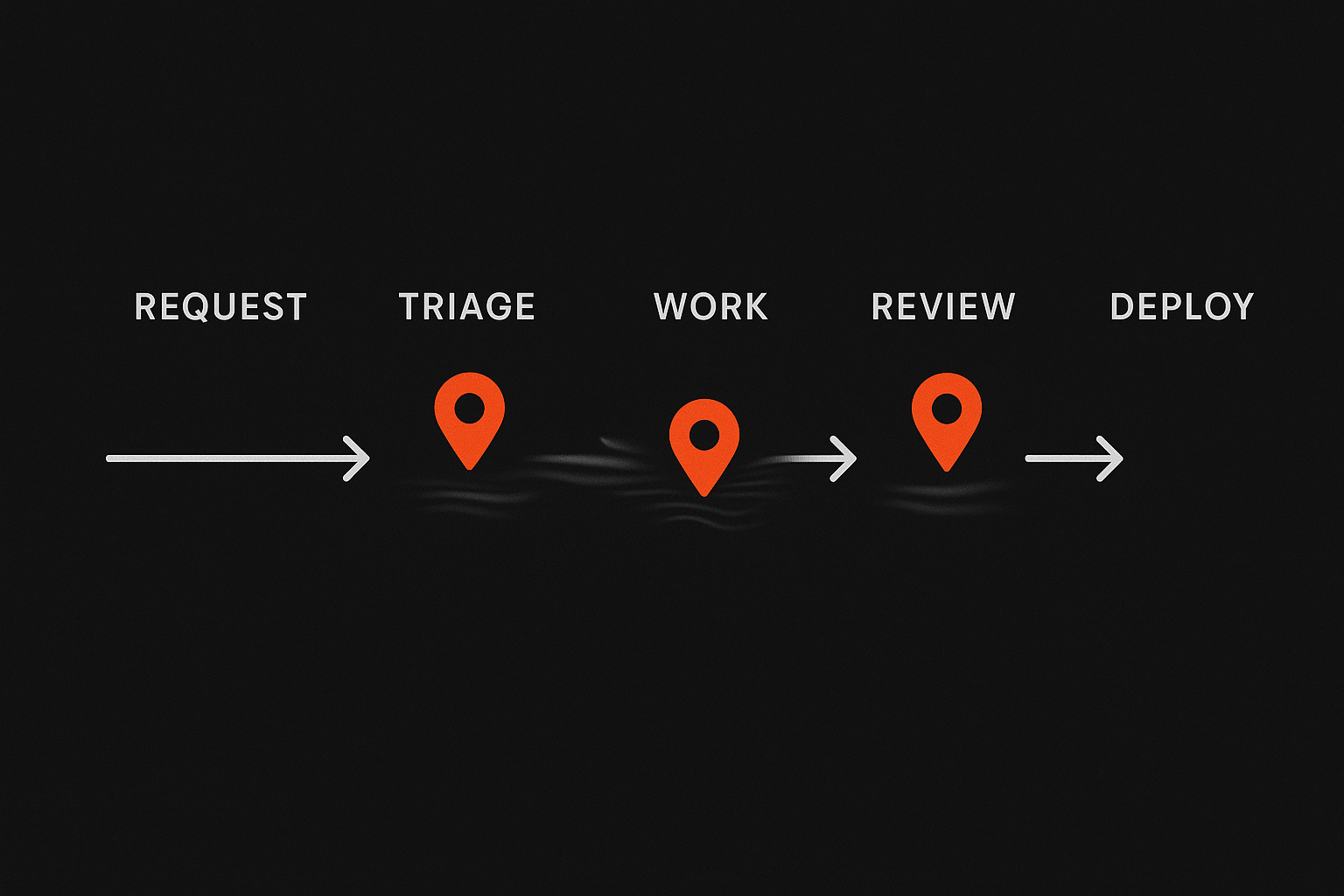
Where handoffs create real cost
Look for these patterns in your workflows. They are small, common, and surprisingly expensive over time.
- Waiting for context: The next person on the task lacks the right files, links, or decision history and has to hunt.
- Context switching: People pause deep work to respond to pings or hunt for artifacts, losing flow.
- Manual copying: Data is copy-pasted across tools — typos, mismatches, and missing fields follow.
- Unclear ownership: A task sits in limbo because nobody knows who should act next.
- Rework and rollback: Missing constraints or hidden assumptions cause errors that must be fixed later.
- Audit and compliance gaps: Manual steps leave no clear log or trace of who did what.
These add up in time, risk, and morale. A single unresolved handoff can cascade — delaying launches, confusing customers, or generating defects.
Real-world examples (short)
- Support ticket escalations: The engineer gets a ticket with insufficient logs and must ask for attachments; the ticket flips between teams while the customer waits.
- Product to Ops release: Deploy notes are in a doc that isn't versioned; engineers run mismatched scripts and trigger rollbacks.
- Sales to onboarding: Important contract terms are lost in email threads and the customer is onboarded on the wrong plan.
Root causes — not just people
Handoffs are symptoms, not the disease. Common root causes:
- Fragmented data: No canonical source of truth for the item being handed off.
- Asynchronous tooling mismatches: Tool A has a field that Tool B doesn't; data is lost in translation.
- No structured metadata: Freeform notes make automation and search unreliable.
- Social protocols over systems: Relying on person-to-person rituals instead of durable processes.
Fixes that depend on persuasion alone rarely scale. You need better systems and targeted automation.
Practical, low-friction ways to reduce handoff drag
You don't need a full redesign. Use these practical tactics to reduce delays and errors in weeks, not months.
Map the handoffs first
- List the frequent handoffs (e.g., Dev -> QA, Sales -> Onboarding).
- For each, capture: trigger, inputs required, outputs expected, and acceptance criteria.
- Time a few examples to get a baseline for lead time.
Standardize the minimum required context
- Define a small set of structured fields that must accompany the handoff (e.g., ID, status, customer tier, attachments, decision points).
- Use templates or forms so the required fields are enforced before a handoff is allowed.
Automate routine routing and validation
- Replace manual copy-paste with a trigger-based action: status change, form submit, or webhook.
- Automations can create the next task, attach the right files, and populate metadata.
- Keep automations simple and observable (logs, notifications).
Add lightweight agents for triage
- Use simple agents or scripted bots to validate inputs, fill missing fields, or suggest owners.
- Agents are useful for repetitive checks (valid file formats, presence of key fields).
- Always include a human-in-the-loop for unclear cases.
Make the handoff discoverable and searchable
- Ensure each handoff has a unique ID, timestamp, and short summary.
- Use tags and consistent naming so search or an agent can find the latest artifact.
Build visible SLAs and ownership
- Attach a small SLA (e.g., acknowledge within 2 hours, resolve within 24) and make ownership explicit.
- Use dashboards that show blocked items and aging handoffs.
Example recipes you can try today
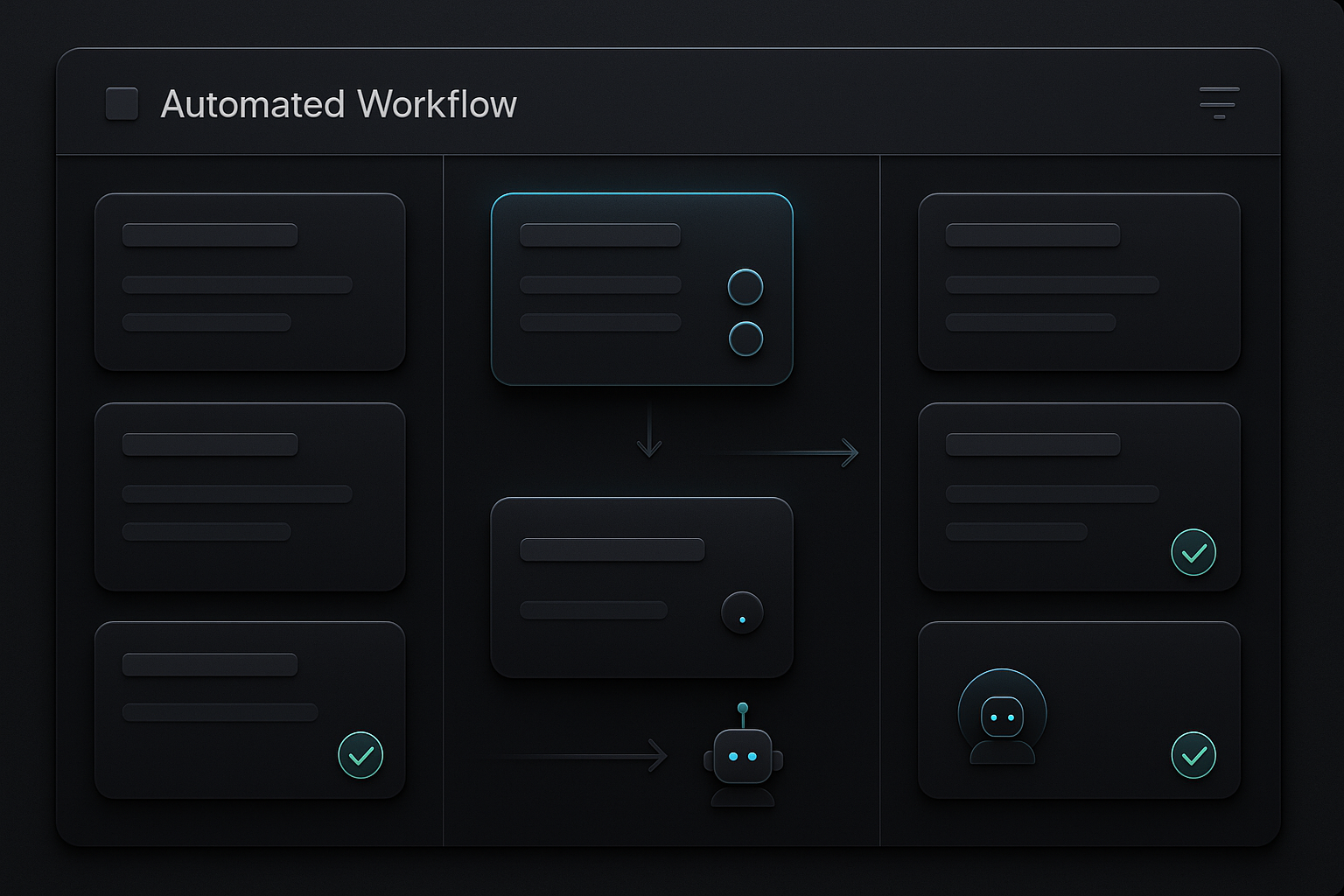
Quick automation recipe (no-code friendly): When a ticket status moves to "Ready for QA," auto-create a QA task in the QA board, copy attachments, and post a single-thread summary with links. Include a validation step that checks for a required test plan file; if missing, route back with a checklist.
Agent-assisted triage: An agent checks incoming requests for required fields, fills obvious data (e.g., maps product codes to names), and flags ambiguous cases. This reduces back-and-forth and speeds assignment.
Lightweight event bus: For teams with multiple tools, use an event-driven approach: a canonical event (e.g., order.completed) carries structured payloads and subscribers take the data they need—no manual copy-paste.
Where automation can backfire (and how to avoid it)
- Over-automation: Automating complex judgment calls causes mistakes. Keep humans for decisions with nuance.
- Hidden failures: If automations silently fail, you lose trust. Log and surface errors clearly.
- Data drift: Without versioning and audits, automated data can diverge from reality. Keep a clear single source of truth and record changes.
A minimal rollout plan (5 steps)
- Pick one frequent, painful handoff.
- Map inputs, outputs, and acceptance criteria in a single page.
- Implement a small form or template that enforces required fields.
- Add one automation: route, validate, and create the next task.
- Measure lead time and iterate for two weeks.
Repeat with the next handoff. Small wins compound faster than big, risky projects.
Tech choices — keep them aligned with the problem
- If the cost is context switching, start with templates and search improvements.
- If the cost is repetitive routing, add simple automations or webhooks.
- If the cost is missing data, standardize metadata and add validation agents.
You don't need a single monolithic platform. Combine a canonical datastore with lightweight integrations and visible dashboards.
Short practical takeaway
Manual handoffs are small in isolation but compound across teams. Start by mapping a single painful handoff, enforce a minimal set of structured context, and add one automation to route and validate. Repeat: small, measurable changes reduce delay, confusion, and errors without a big platform rewrite.
