
How Consumer AI Habits Are Changing Business Expectations
Introduction
People interact with AI every day: quick summaries, chat assistants, recommendation feeds, and voice queries. Those consumer experiences shape simple assumptions: responses should be fast, suggestions should feel personal, and interfaces should be forgiving.
Businesses interpreting those signals can turn friction into advantage. Below is a practical map from common consumer AI habits to concrete expectations — and clear steps teams can take to meet them.
Consumer habits at a glance
- Speed over perfection: Users prefer a fast, useful reply to a slow, perfect one.
- Personalization by default: Recommendations that feel tailored are assumed, not earned.
- Conversational discovery: People reach for chat or natural language before digging through menus.
- Self-serve expectation: If a consumer tool can answer questions immediately, customers expect business systems to do the same.
These habits are not just about new features; they change the baseline for support SLAs, product flows, and how teams measure success.
How those habits translate into business expectations
1) Speed: low latency becomes a baseline
Consumers are used to sub-second or single-second responses in apps. In a business context this pushes teams to:
- Re-evaluate what must be real-time (auth checks, simple queries) versus batch (large reports).
- Prefer smaller, specialized models or cached answers for common queries to reduce latency.
- Improve telemetry so you can identify and optimize slow paths instead of guessing.
2) Personalization: low-friction relevance
Personalization used to require heavy integration and months of model work. Consumer habits raise the expectation that systems should:
- Use available context (user role, recent actions, account data) to bias responses.
- Provide transparent options to correct or refine personalization (e.g., "not relevant" controls).
- Keep personalization narrow and explainable—overly broad personalization breaks trust.
3) Support: self-serve first, escalation second
When consumer tools give instant answers, customers expect business support to do the same. That shapes support design:
- Build reliable knowledge retrieval (searchable KBs, vector search for documents).
- Offer layered support: instant automated help, then a clear and fast path to human escalation.
- Track resolution velocity, not just ticket counts.
4) Interfaces & product discovery: conversational and multimodal
Search boxes and menus are no longer the only discovery patterns. Businesses should:
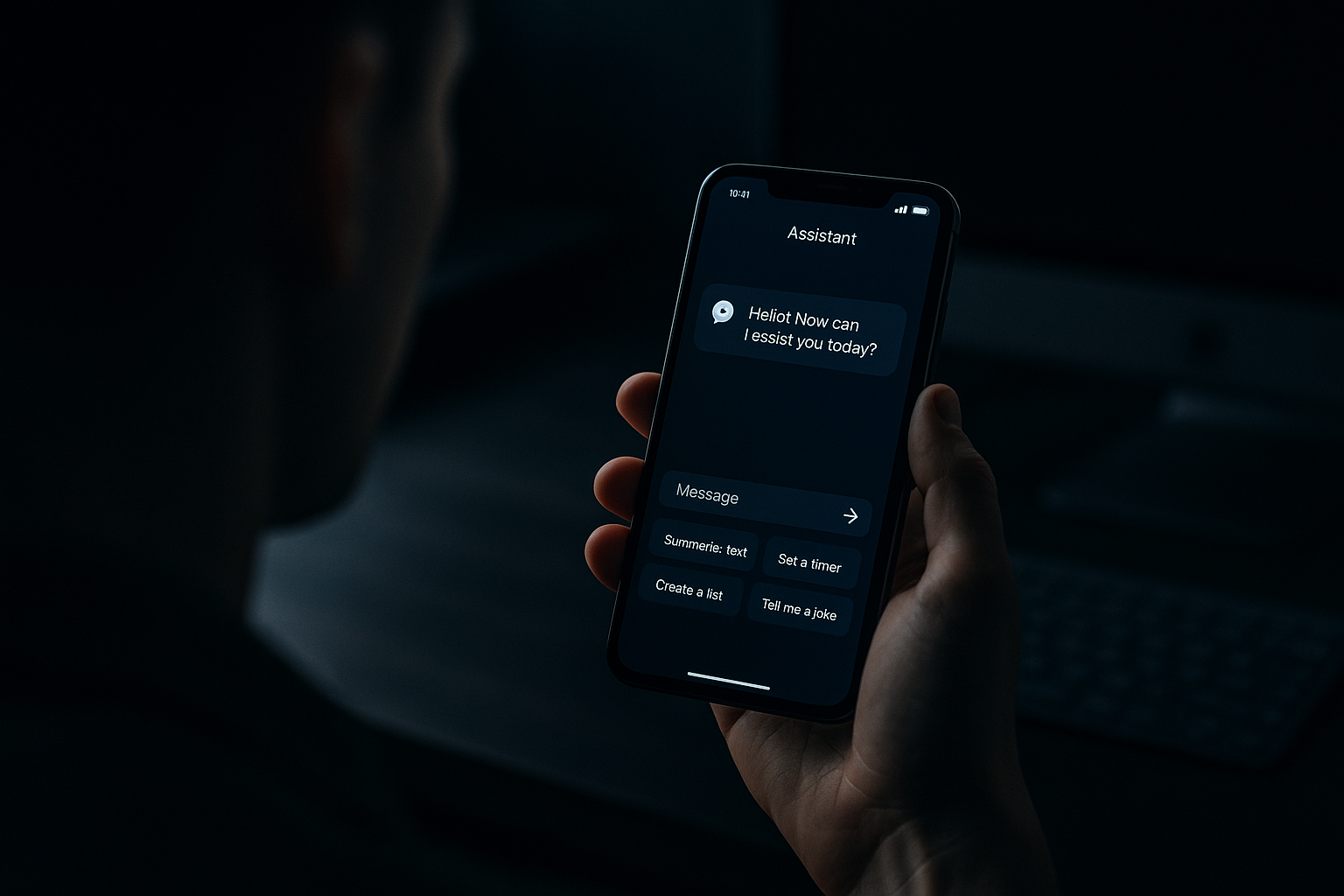
- Add light conversational entry points for discovery and command-like tasks.
- Offer hybrids: GUI controls plus a natural-language bar that can hand off to structured flows.
- Make failures graceful: show quick links or actions when the conversational interface can’t solve the problem.
Practical steps teams can take this quarter
- Audit customer touchpoints
- Map where customers expect instant responses (chat, status pages, onboarding flows).
- Label each touchpoint by desired latency and acceptable accuracy trade-offs.
- Prioritize short-latency wins
- Identify 2–3 frequent queries or actions that customers expect fast answers for (order status, basic troubleshooting, invoices).
- Implement cached answers, small specialized models, or rule-based fallbacks for those items.
- Build or improve retrieval systems
- Centralize your knowledge base and enable fast retrieval (keyword + semantic search).
- Version content and capture signals when automated answers are wrong so humans can correct the source.
- Design interfaces that combine chat and structure
- Start with a small conversational surface that can trigger existing workflows.
- Provide clear pathways from the chat to forms, downloads, or human agents.
- Instrument outcomes, not just usage
- Measure time-to-answer, first-contact resolution, and downstream tasks completed after an automated interaction.
- Tie metrics to business outcomes (reduced support cost, faster onboarding, higher conversion).
- Prepare graceful degradation
- When personalization is unavailable, fall back to neutral, helpful defaults and explain why (e.g., missing permissions).
- Avoid hallucination by preferring “I don’t know” and a human handoff over guessing.

A short implementation checklist for product and ops
- Create a latency/accuracy matrix for common user flows.
- Choose two high-impact flows to make faster or more personalized this quarter.
- Instrument those flows with user feedback and error capture.
- Run a two-week pilot with guardrails, then roll changes into production if metrics improve.
Practical takeaway
Consumer AI habits are reshaping expectations around speed, personalization, support, and interfaces. Start small: pick a few high-traffic touchpoints, prioritize low-latency and transparent personalization, and measure outcomes. Incremental, instrumented changes reduce risk and deliver visible improvements quickly.
