
Why Trust Is Becoming a Product Feature in the AI Era
Trust used to be a sales pitch: trust us, we'll keep your data safe and our model behaves. That’s no longer enough. As AI becomes embedded in core workflows, transparency, user control, and operational reliability are expected capabilities — not optional extras.
This post explains what those capabilities look like in product terms and gives a short implementation checklist you can apply to software, services, or internal systems.
What it means to treat trust as a product feature
When trust is a feature, you design, measure, and ship it the same way you do performance or search quality. Three concrete aspects matter:
- Transparency: users can see how decisions were made and where data came from.
- Control: users and administrators can adjust behavior, permissions, and correction paths.
- Reliability: the system behaves predictably, is monitored, and can recover from mistakes.
These elements are complementary. Transparency helps users decide when to trust a result. Control lets them limit risk. Reliability makes trust durable in production.
Transparency: make the system inspectable
Transparency is not just an explanation box. Useful transparency is structured and actionable.
Key product components:
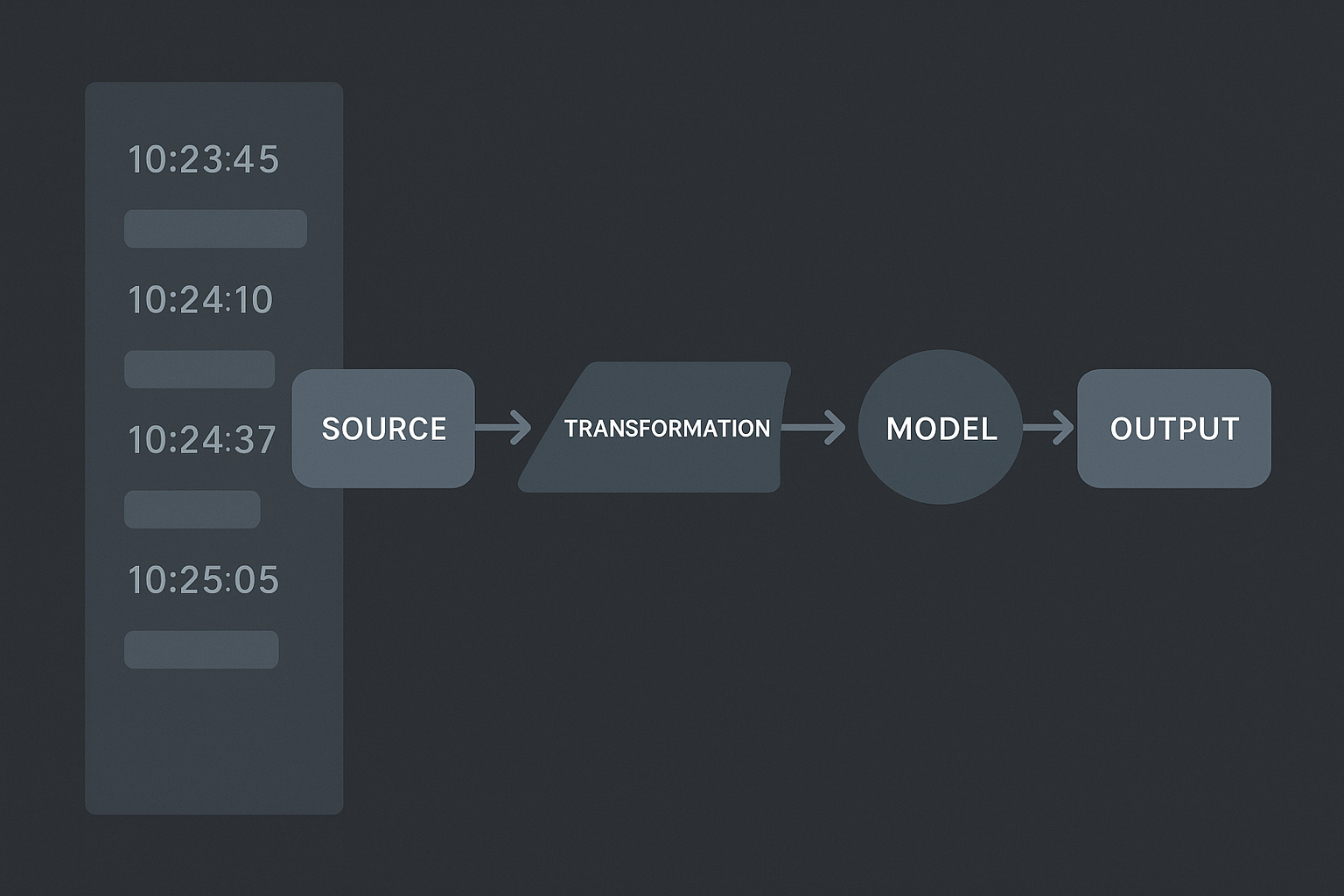
- Provenance and audit trails. Record where inputs came from, which model/version produced an output, and what transformations occurred. Make this accessible to users and auditors.
- Explainability interfaces. Provide concise reasons for decisions (e.g., 'Because the contract mentions X clause'), not a long technical dump. Use layered details: short summary, expandable evidence, raw logs.
- Confidence and uncertainty. Surface uncertainty scores or a short note when confidence is low, and link to evidence.
Practical pattern: present one-line, human-readable reasons with a single-click path to the supporting data.
Control: give users levers, not just warnings
Control reduces harm and increases adoption. Controls can be broad (policy settings) or narrow (per-request toggles).
Useful control features:
- Role-based permissions for sensitive outputs and data access.
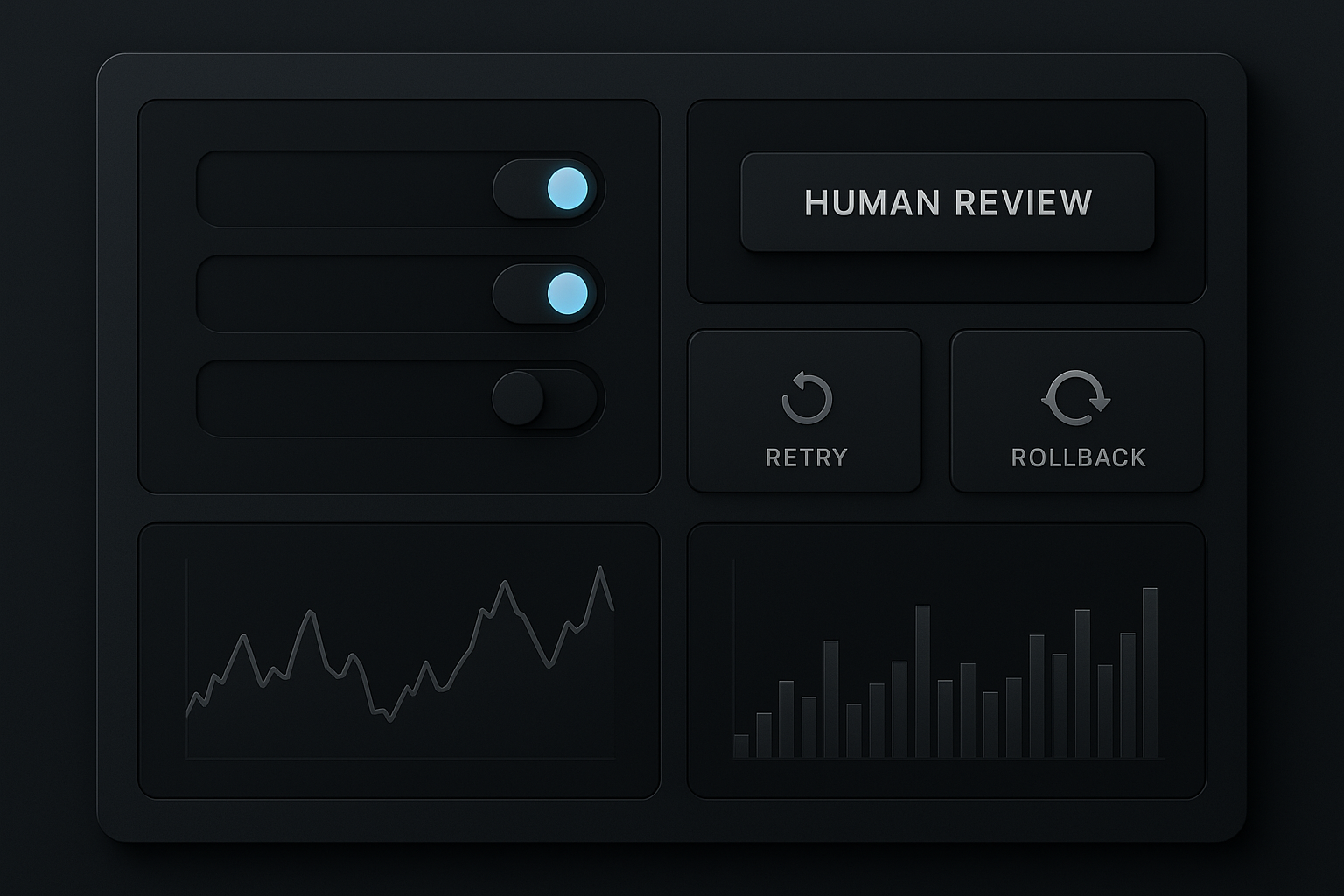
- Human-in-the-loop (HITL) workflows for high-risk tasks: require sign-off before action.
- Undo, retry, and rollback functions so users can correct mistakes without manual intervention.
- Personalized settings: let customers tune aggression, privacy levels, or automation thresholds.
Design tip: default to safer settings, but make escalation paths visible and reversible.
Reliability: operationalize trust
Reliability is where most products fail. AI adds nondeterminism and dependencies, so operational practices must expand.
Operational priorities:
- Versioning and canary releases for models and data pipelines.
- End-to-end monitoring: latency, error rate, distributional drift, and outcome quality.
- Automated alerts tied to business metrics, not just system metrics. For example: 'increase in customer disputes' should trigger an investigation pipeline.
- Playbooks and runbooks for incidents that involve model behavior (how to scale back, rollback, or route to human handlers).
A production checklist should include regular verification of outputs against known anchors and scheduled sanity checks after deployments.
UX and product design considerations
Trust features must be discoverable and respectful of attention:
- Place provenance and controls close to the output they affect.
- Use progressive disclosure: show a concise status line, let users expand for logs and toggles.
- Make trust actions local: 'request human review' or 'explain why' should be one click from the result.
- Provide clear error states and expected next steps when uncertain or degraded.
Developer and API ergonomics
Treat trust primitives as first-class API concepts:
- Expose model version IDs, request IDs, and provenance tokens in responses.
- Allow programmatic toggles for safety and human review workflows.
- Provide SDK helpers for storing, querying, and displaying audit trails.
APIs that return opaque blobs force product teams to build ad-hoc trust layers. Structured, stable primitives reduce that work.
Business and compliance implications
Making trust a feature helps with procurement, audits, and retention:
- Customers buying mission-critical systems will ask for evidence and controls. Having them built-in shortens sales cycles.
- Auditability reduces legal and compliance risk when you can demonstrate decision records.
- Transparency features can be a differentiator in crowded markets where outcomes matter more than raw accuracy.
Avoid overselling: transparent logs do not eliminate liability. They make investigation and remediation faster.
Implementation checklist (practical steps)
- Add model and data provenance fields to outputs (model ID, data source, transformation hash).
- Build a short "reason" layer: one-line explanation + link to evidence.
- Implement role-based controls and a simple HITL flow for high-risk actions.
- Create monitoring dashboards that combine system metrics with outcome signals.
- Draft incident playbooks that include model rollback procedures.
- Expose trust primitives in your API and SDKs.
- Run tabletop exercises with real users to test discoverability and effectiveness.
Common pitfalls to avoid
- Overloading users with raw logs. Raw data is useful for auditors but not for everyday users.
- Treating trust as a marketing checkbox instead of a measurable product goal.
- Relying solely on legal disclaimers instead of investable controls and monitoring.
Quick example (high level)
A customer support automation system added three features: a short reason line for every suggested reply, a "request human review" button, and a dashboard that correlated suggested replies with subsequent customer escalations. The combination reduced disputed responses and made it faster to find problematic prompts or model versions. The measures were simple, but they made the product usable for more account types.
When to prioritize which feature
- Early MVPs: surface a one-line reason and an easy fallback to a human.
- Growing products: add provenance and basic rollback/versioning.
- Enterprise: full audit trails, RBAC, and SOC-level monitoring and playbooks.
Conclusion
Building trust into products is not a single project — it's a shift in what you ship. Transparency, control, and reliability are practical features that reduce risk, shorten sales cycles, and improve long-term product quality.
Practical takeaway: start by adding model/version provenance and a one-line reason to every automated output, then couple that with a simple human-review path and monitoring that links outcomes to model versions.
