
Why AI Search Is Changing Website Strategy
Search on the web isn’t just a list of links anymore. Conversational search systems synthesize answers from many sources and surface short, authoritative snippets. For businesses that depend on discovery — leads, quotes, orders, support — that changes what your website needs to do.
This post covers three practical things to know:
- How conversational search changes content structure
- What counts as authority now (and how to show it)
- Concrete publishing and operational tactics so your site stays discoverable and accurate
What conversational search expects from a site
Conversational search looks for concise, verifiable answers it can stitch into replies. That favors different page design and content types than traditional SEO:
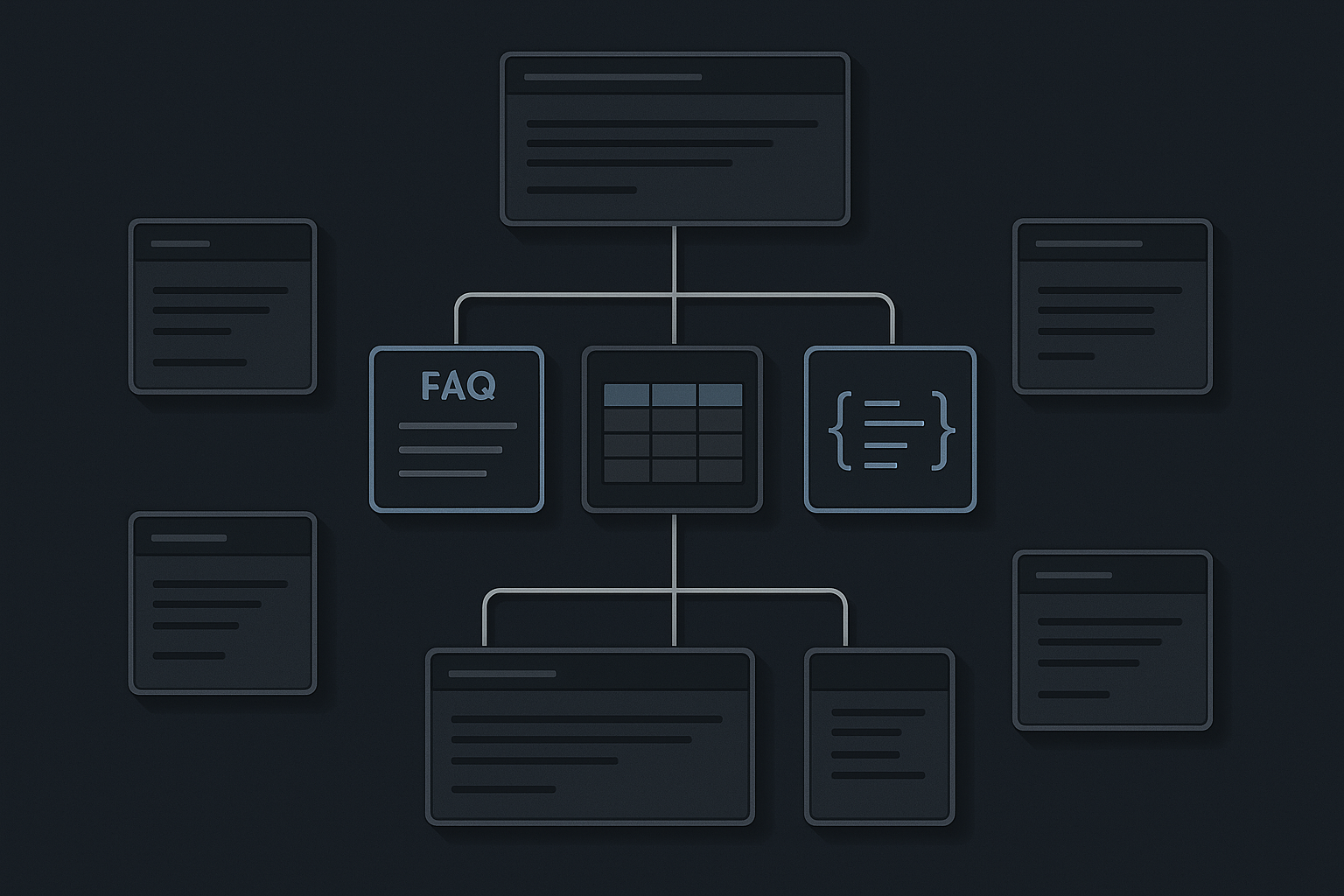
- Short, metadata-rich content blocks over single long-form pages
- Machine-readable facts (structured data, JSON-LD, tables) next to human explanations
- Clear source signals: timestamps, authors, canonical URLs, and third-party corroboration
- Stable endpoints for programmatic access (APIs, product feeds) that can be referenced in answers
Why this matters: when a model answers a user, it often extracts small chunks from pages. If those chunks are clear and well-labeled, your site is more likely to be cited and to drive downstream conversions (quote requests, demo signups, order starts).
Practical example — quoting and order entry
If your business provides instant estimates or configuration-based quotes, conversational search agents will use structured product attributes when composing an answer. That means:
- Publish product attributes as machine-readable fields (dimensions, lead time, base price, SKU, options)
- Offer example configurations and resulting prices in short tables
- Provide an API or a simple JSON endpoint for the quoting logic so agents can return consistent answers
A conversational result that cites a product page with clear attributes is more likely to be trusted and followed through to an order entry flow.
What counts as authority now (and how to build it)
Traditional authority signals — backlinks, domain age — still matter. But conversational search adds a few higher-value signals:
- Provenance: visible citations and links back to the exact paragraph or endpoint the answer used
- Freshness: explicit last-updated timestamps on facts like pricing, inventory, SLAs
- Machine verifiability: structured data and APIs that confirm numbers or availability
- Human validation: named authors, editors, or a verified company statement for claims
- Reproducible evidence: case studies with measurable outcomes and clear dates
Ways to build these signals:
- Add inline citations and anchorable snippets for important facts (pricing, compliance, lead times)
- Use schema.org markup and JSON-LD for products, FAQs, and organizational data
- Publish stable API endpoints that mirror the facts on your pages (price, specs, stock)
- Keep an audit trail: maintain a changelog page or machine-readable history for critical content
What to publish: content that conversational search prefers
Focus on publishing microcontent that answers specific intents. Priority list:
- Decision guides and short task flows (e.g., "Which product fits X requirement?" with a short decision tree)
- Structured product/spec sheets with attributes and configurable example quotes
- FAQ nodes with canonical short answers (a sentence or two) followed by an optional long-form explanation
- Pricing matrices and calculators exposed as both HTML tables and machine-readable JSON
- Integration documentation and API references (clear examples and sample responses)
- Operational policies and SLAs with dates and contact endpoints
- Case studies with verified metrics and references
Keep pages split into clear nodes: a one-line answer, a one-paragraph context, and a link to the canonical resource. That structure is both human- and model-friendly.
Operational controls: review queues, permissions, and audit trails
When models and agents can surface or suggest content, you need operational guards so answers remain accurate and compliant.
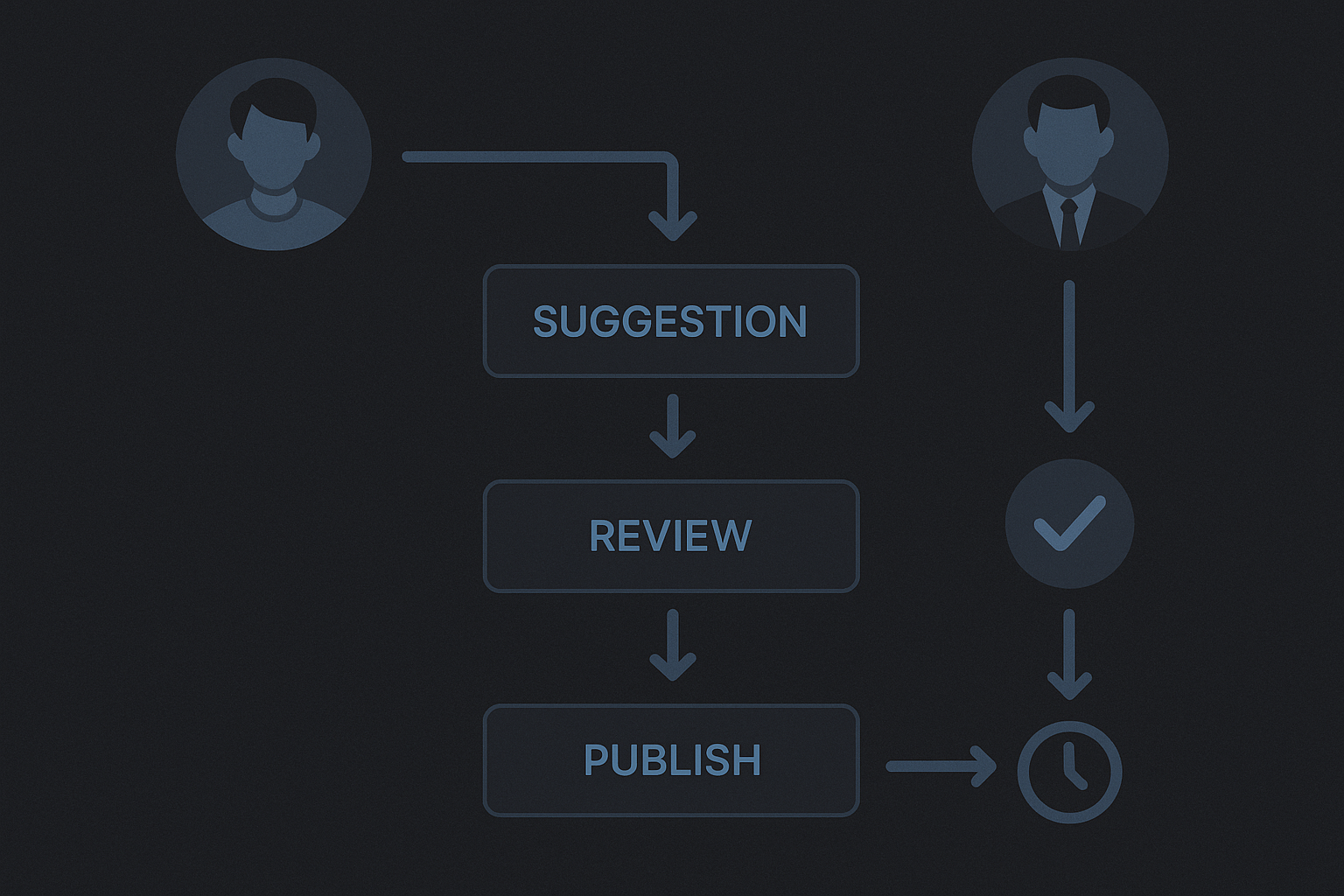
- Content suggestion pipeline: let models suggest edits or new microcontent, but route them to a "Content Review Queue".
- Role-based permissions: writers can propose, editors approve, and a compliance role signs off on regulated content.
- Audit trails: every suggestion, change, approval, and publishing event should be logged with time, user, and diff.
- Versioned endpoints: APIs and important pages should support versioning so conversational agents can cite a stable revision.
- Feedback recording: capture which conversational answers led to clicks, conversions, or feedback (was the answer helpful?) to close the accuracy loop.
Example workflow for a price update:
- Product team updates a pricing spreadsheet (source of truth)
- Automated job publishes a machine-readable JSON feed to a staging endpoint
- Content review queue flags notable price changes for editor approval (with diff and impact assessment)
- Approved changes are deployed to production feed; audit record stored and timestamped
- Monitoring alerts if query-to-conversion drops after the change
Integrating conversational search with internal tools
Conversational search isn’t only for external discovery. Internal tools — quoting systems, intake forms, dashboards — can benefit from the same structure:
- Make internal knowledge just as queryable: expose spec sheets and SLAs behind authenticated endpoints and add role-aware provenance (who approved it)
- Allow agents to draft orders or intake forms, but require a human sign-off step that’s captured in the audit trail
- Build search logs into dashboards: track what queries return which answers, corrections made, and how often users escalate to a human
This turns search from a black box into a measurable part of the workflow: fewer repeated questions, faster quoting, and cleaner handoffs.
Measuring success and maintaining quality
Track a handful of practical signals rather than chasing vanity metrics:
- Answer accuracy rate: fraction of conversational answers that users mark as correct or that lead to a low escalation rate
- Citation rate: how often your pages are cited as the source of an answer
- Freshness lag: time between source-of-truth update and published change visible to conversational systems
- Conversion rate from conversational answer to business action (quote request, demo, order)
- Number of suggested edits blocked by review (indicator of model hallucination or outdated content)
Use these to prioritize which nodes need structure, which APIs need versioning, and which review paths are failing.
Small checklist to get started (first 30 days)
- Audit: identify 10 pages that generate the most lead- or revenue-focused queries
- Structure: reformat each into "one-line answer + short context + canonical link" and add schema.org markup
- Expose: create or verify JSON endpoints for product attributes and pricing
- Control: set up a basic content review queue with roles and a simple audit log
- Monitor: instrument conversational logs and set up a dashboard tracking citation rate and conversion
Where to avoid over-engineering
- Don’t publish every internal note as public content. Prioritize high-intent facts that customers need to transact or decide.
- Don’t let models directly publish critical content without approval. Use agentic workflows for drafts, not autopublish.
- Don’t chase perfect coverage for low-value queries. Focus on the decision points that move business outcomes.
Final practical takeaway
Conversational search rewards short, verified, machine-readable facts and stable endpoints. Reorganize pages into microcontent nodes, publish structured product and pricing data, and add simple operational controls: review queues, role-based permissions, and audit trails. Start small — pick a few high-value pages, add schema and a JSON feed, and route model suggestions through an editor-led queue.
Practical takeaway: convert the facts that drive quotes, orders, and support into tiny, verified content nodes with machine-readable endpoints — and gate model-suggested edits behind a simple review and audit workflow.
